


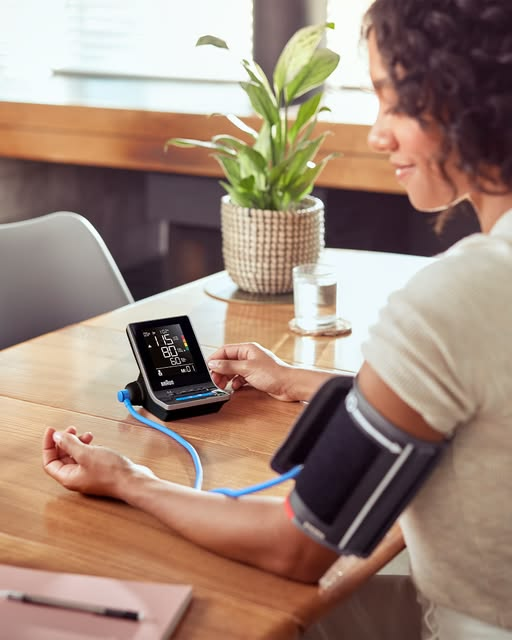
Why Home Monitoring Matters
The AHA and American College of Cardiology (ACC) recommend home blood pressure monitoring for several important reasons:
•Detects “white coat hypertension” – elevated readings only in medical settings
•Identifies “masked hypertension” – normal office readings but high at home
•Provides a more accurate picture of your typical blood pressure
•Helps track the effectiveness of medications
•Empowers patients to manage their condition actively
According to meta-analyses cited by the AHA, for every 10 mmHg reduction in systolic blood pressure, stroke risk decreases by about 27% and coronary heart disease risk decreases by about 17%.
Proper Measurement Technique
Accurate readings require proper technique. The AHA recommends the following steps:
•Sit quietly for 5 minutes before measuring – no talking, phone use, or TV
•Sit with your back supported and feet flat on the floor
•Rest your arm on a flat surface at heart level
•Use a properly sized cuff – the bladder should encircle 80% of your upper arm
•Don’t measure over clothing
•Take 2-3 readings, 1 minute apart, and record the average
•Measure at the same times each day – morning and evening recommended
Understanding Your Numbers
Blood pressure is measured in millimeters of mercury (mmHg) and recorded as two numbers:
•Systolic (top number): Pressure when heart beats
•Diastolic (bottom number): Pressure when heart rests between beats
Blood Pressure Categories (ACC/AHA Guidelines)
The current guidelines define blood pressure categories as follows:
•Normal: Less than 120/80 mmHg
•Elevated: 120-129 / less than 80 mmHg
•High Blood Pressure Stage 1: 130-139 / 80-89 mmHg
•High Blood Pressure Stage 2: 140 or higher / 90 or higher mmHg
•Hypertensive Crisis: Higher than 180 / higher than 120 mmHg (seek immediate care)
If your reading exceeds 180/120 mmHg, wait 5 minutes and measure again. If still elevated, contact your doctor immediately or call 911 if you have symptoms like chest pain, shortness of breath, or vision changes.
Choosing a Home Blood Pressure Monitor
The AHA recommends automatic, cuff-style, upper-arm monitors. Look for:
•Validated accuracy – check validatebp.org for tested devices
•Proper cuff size for your arm circumference
•Memory storage to track readings over time
•Ability to share readings with your healthcare provider
How We Can Help
As a New Essence Health member, you have unlimited access to discuss your blood pressure readings with Farzana Badrun We can help you interpret your numbers, adjust medications if needed, and develop a personalized plan to reach your target blood pressure.
Many of our members find that regular check-ins via telehealth, combined with home monitoring, provide better blood pressure control than traditional office-only visits.
Pro tip: Bring your home monitor to an in-person visit so we can compare its readings to our office equipment and ensure accuracy.