


The PREDIMED Trial: Landmark Research
The PREDIMED (Prevención con Dieta Mediterránea) trial, funded in part by the NIH, followed over 7,400 participants at high cardiovascular risk. The results were striking:
- 30% reduction in cardiovascular events (heart attacks, strokes, cardiovascular death)
- Significant reduction in stroke risk specifically
- Benefits seen with both Mediterranean diet + extra virgin olive oil and Mediterranean diet + nuts
- Results were so significant the trial was stopped early
The PREDIMED trial was one of the largest and most rigorous dietary intervention studies ever conducted, providing strong evidence for the Mediterranean diet’s heart-protective effects.
Key Components of the Mediterranean Diet
The Mediterranean diet emphasizes:
- Extra virgin olive oil as the primary fat source (4+ tablespoons daily)
- Abundant vegetables (2+ servings per meal)
- Fresh fruits daily (3+ servings)
- Whole grains, legumes, and nuts
- Fish and seafood (2+ times per week)
- Moderate poultry and dairy
- Limited red meat (less than once weekly)
- Moderate red wine with meals (optional)
Foods to Emphasize
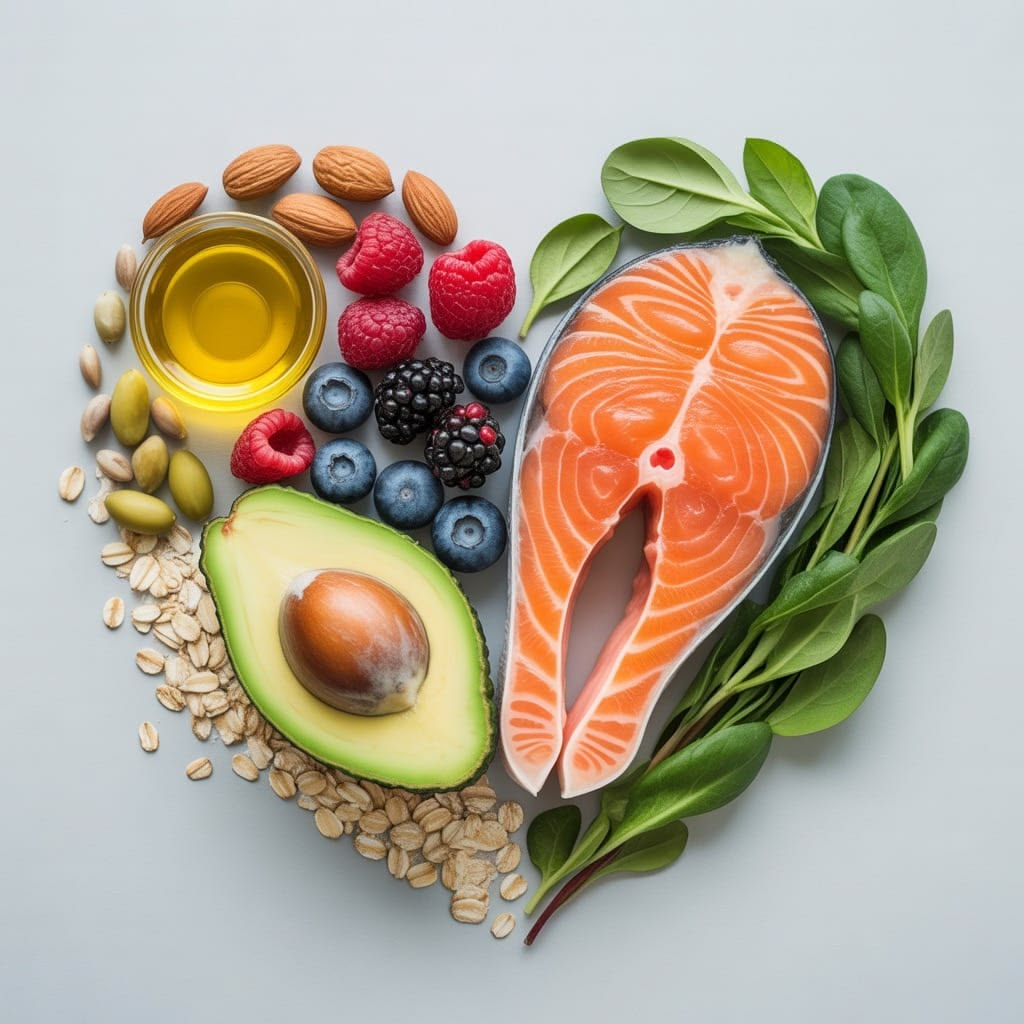
Build your meals around these heart-healthy foods:
- Olive oil: Use for cooking and dressings instead of butter
- Fatty fish: Salmon, sardines, mackerel rich in omega-3s
- Nuts: Almonds, walnuts, pistachios (handful daily)
- Legumes: Beans, lentils, chickpeas several times weekly
- Whole grains: Quinoa, brown rice, whole wheat bread
- Leafy greens: Spinach, kale, arugula
- Tomatoes: Rich in lycopene, especially when cooked
- Berries: Blueberries, strawberries for antioxidants
Foods to Limit
Reduce or avoid these foods:
- Processed meats: Bacon, sausage, deli meats
- Red meat: Beef, pork, lamb (occasional is fine)
- Refined carbohydrates: White bread, pasta, pastries
- Added sugars: Sodas, candy, sweetened beverages
- Highly processed foods: Chips, packaged snacks
- Trans fats: Found in some fried and processed foods
Beyond Diet: The Mediterranean Lifestyle
The Mediterranean approach extends beyond food:
- Regular physical activity – walking, gardening, swimming
- Eating meals with family and friends
- Taking time to enjoy food rather than rushing
- Moderate alcohol intake (if you drink)
- Adequate sleep and stress management
Getting Started
You don’t need to overhaul your diet overnight. Start with these simple changes:
- Switch to olive oil for cooking
- Add an extra serving of vegetables to each meal
- Replace one red meat meal with fish weekly
- Snack on nuts instead of processed foods
- Choose whole grains over refined grains
Small, sustainable changes are more effective than dramatic overhauls. Pick one or two changes to start, and add more over time.
Personalized Nutrition Guidance
As your primary care provider, I can help you develop a personalized nutrition plan based on your health goals, preferences, and any medical conditions. During your wellness visits, we can discuss your diet and identify practical ways to incorporate more heart-healthy foods.
If you have specific conditions like diabetes, high cholesterol, or hypertension, dietary changes can be a powerful complement to medication—and sometimes reduce the need for medication over time.